Ki Tetse:
Are we the "rebellious sons?"
A selection of commentaries on a difficult Torah commandment, with a surprising twist at the end.
A selection of commentaries on a difficult Torah commandment, with a surprising twist at the end.

There are no coincidences. The word Elul and the word Re'eh contain many messages in symbolic form.

Reading Rabbi Lazer Gurkow's article this week informs us as to the outcome of reciting blessings. What do the commentaries add to explain the injunction to say 100 blessings each day?

Commentators weigh in on Moshe's pleas to enter the land.

What do our Torah Sages say about the glaring differences in the two accounts of the 12 spies? And an idea for reconciling them.
Could there be a greater act of mesirut nefesh, than Moshe’s decision to depart this life, so as to not to delay the vengeance of Hashem, and of Bnei Israel?! Read how the commentaries on this week's parsha see it.

Their love for the land was palpable. Even their timing was perfect. A look at the different ways our commentators described the daughters' viewpoint.

Questions and answers of rabbinic commentators on the idea of laws for which we have no reason.

A selection of commentaries weighing in on the meaning of the almond branch blossoming staff test.

Was their sin lack of faith in God, was it a provocation, was it their fear of having to fight - or a combination?
At the end of days, the nations will claim that they are entitled to be rewarded, even though they did not keep the Torah.

Various Torah commentaries' o;pinions on the reason the tribe of Levi had a different status.

"What is the meaning of:’if you follow My statutes’? It means that you toil in the study of Torah..".
Commentators explain why Shmitta transgression is punished severaly and what reliance of Hashem it proposesl

Keeping Mitzvot between man-and-fellow man means to look both at our fellow man and at ourselves correctly, in ways which are ‘opposite’.
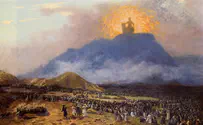
Follow in the ways of Avraham Avinu - make sure that every day of our sefira, is truly ‘ours’ - that we have given it content, by serving Hashem.

Are speakers of lashon ha’ra not found amongst the nations? Why then don’t we find that they are afflicted by tzaraat?
Shmini describes the wondrous events of that first day of Nissan, the eighth day of the investiture of the Mishkan.

Our Sages expound the word ‘Saying’ in the first pasuk in several ways, feeling that it is superfluous, as immediately after it - in the second pasuk - the Torah again says:’Speak to Bnei Israel, and say to them.’
At the end of the Book of Shmot, Moshe cannot enter the Tent of Assembly and the shechina has not yet spoken with him!

The whole of Hashem’s wish in the offerings of the Mishkan was as an atonement for the sin of the calf, to thereby again cleave to Hashem. Careful reading shows that.

if all this was the work of the non-Jewish erev rav, why were Bnei Israel so severely punished?

Moshe’s name is not mentioned in our Parasha.
![And you [Moshe], command the children of Israel...](https://2.a7.org/files/pictures/203x125/1134147.jpg?autocrop=1 "Sipzner /")
Commentaries expound on the meaning of the verse "take for me" instead of "give to me" in this week's parasha on the building of the Tabnernacle.

What did the Torah see, to start its words on the ordinances, specifically on the subject of ‘the Jewish slave? What the commentaries have to say.
‘We can learn from this about man, that even if he is engaged in a Mitzvah or worthwhile matter, how careful he must be not to act disrespectfully towards others.’

The underlying message of our reckoning by the moon, is that the moon is at times in absolute darkness, without even a sliver of light, yet even at this time, we know that it will soon return.

The unspoken answer of Hashem, to Moshe’s query, as to why the affliction increased after Moshe’s first approach to Pharoah, leads to a kal vachoerm.
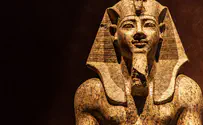
Which brother comes first and what is the deep message hidden in the order of their names?
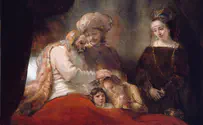
Why did G-d warn Pharaoh of the famine to come?

The pasuk says וישב יעקב: ‘and Yaakov dwelt’, it clearly has the second meaning

It is the will of Hashem, that a Jew be engaged in this physical world, and, in it, find a way to remain sanctified to Hashem.
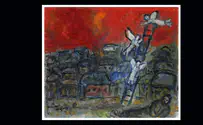
This thorny question as seen in the eyes of various commenttators.

Even the most charitable of men, would not see a need to help those who are well able to attend to their own needs. Not so Rivkah.

We are commanded to go in His ways, and our role is to do an act of chessed each and every day, as this is why we descended to this world.
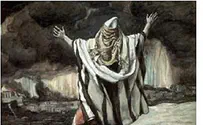
Why would a famine make Abraham leave the land G-d had told him to go to?
The moon decided that Creation should be otherwise and was duly punished.

The wonderful Torah supporting partnership of Zebulun and Asher is explored y various Torah Sages as we prepare for Simchat Torah.

And why did the Tur say that Sukkot is for Yaakov Avinu?
In this world, a judge cannot truly do ‘true justice’, so that it does not punish innocent people, those who may be affected by it.